
How to Choose the Right Mailer Box Size for Your Product
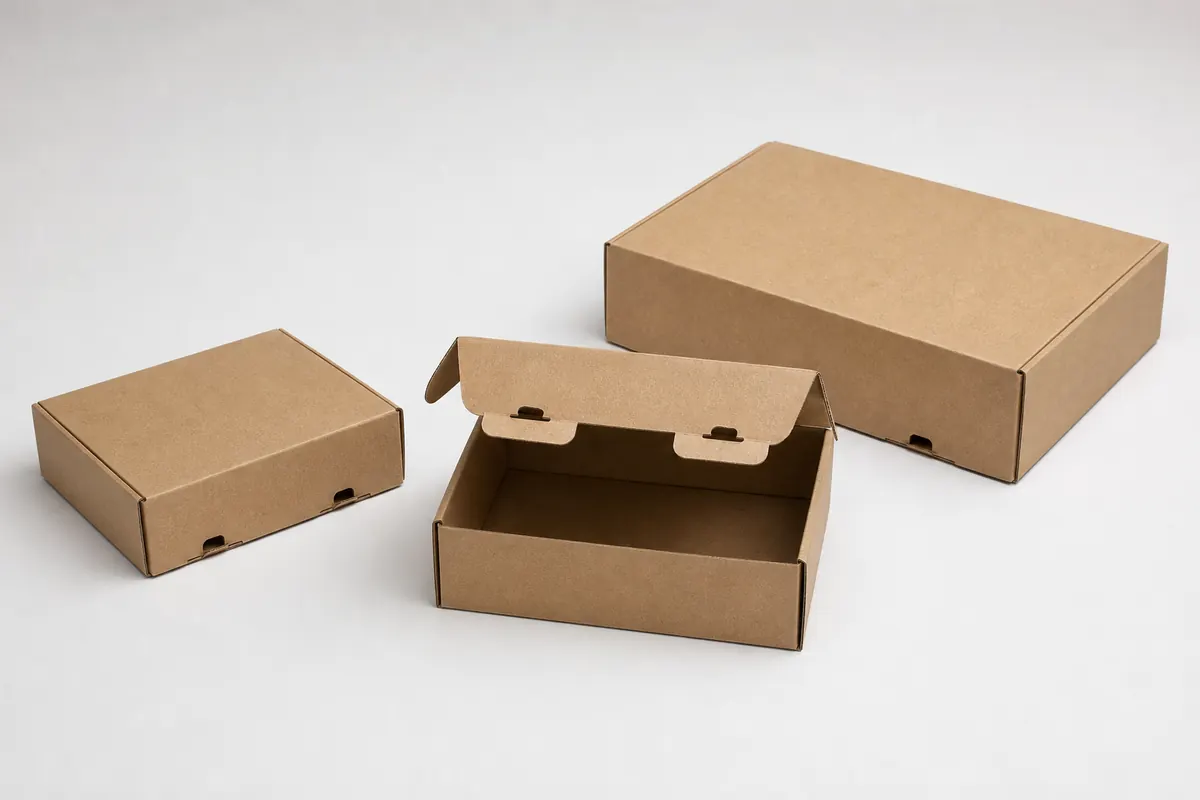
Quick Answer: Measure the product at its widest points in the exact orientation it will be packed, including caps, protrusions, accessories, and any wrap. Then specify the required internal box dimensions after accounting for the planned insert or cushioning, and confirm the fit with a sample; the right allowance depends on the insert, board, and shipping conditions.
1. How should I measure a product before choosing a mailer box?
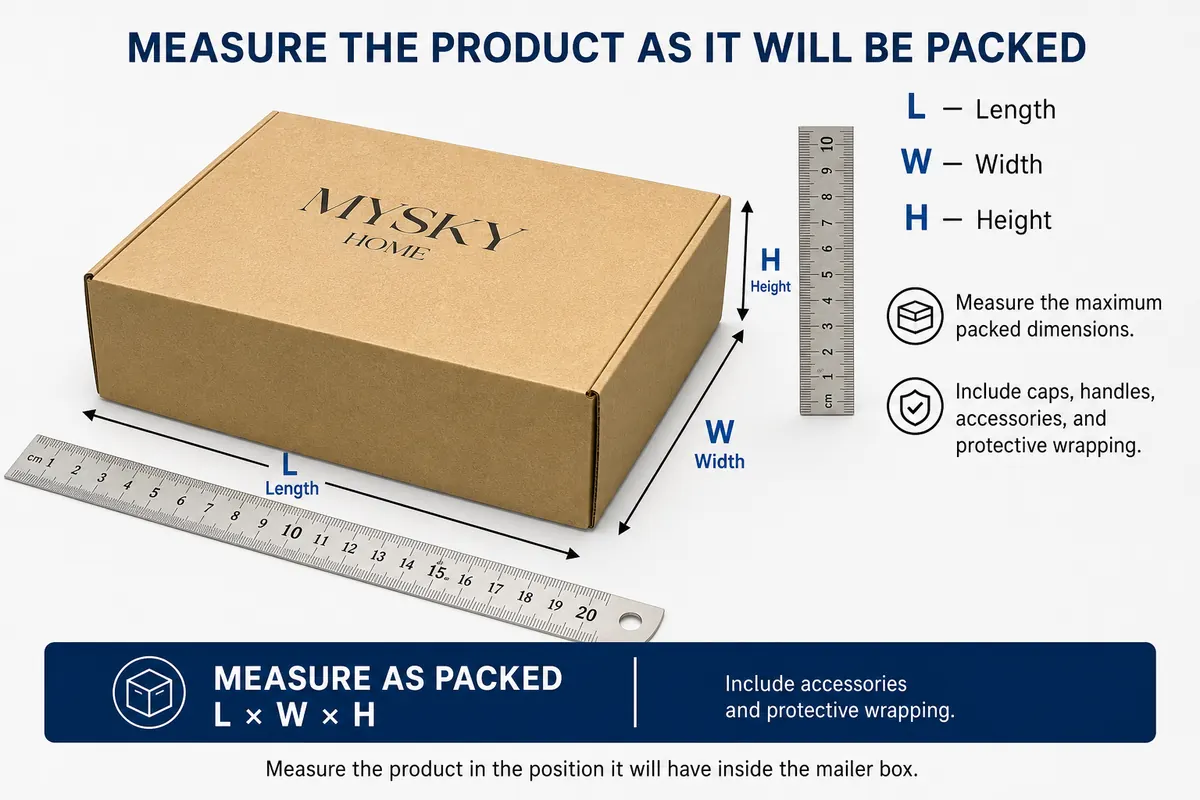
Measure its maximum length, width, and height in the orientation it will be packed. Include caps, protruding parts, accessories, and any wrapping that will go inside the box.
2. Should mailer box dimensions be internal or external?
Specify internal dimensions when the main requirement is that a product fits inside the box. If the box must meet a shipping or storage limit, share that external limit too and ask the manufacturer to confirm the final dimensions.
3. How much extra space should I leave around a product?
There is no universal allowance. The space depends on the insert or cushioning design, the product’s fragility, the box structure, and shipping conditions. Confirm the fit with a sample rather than adding an arbitrary amount.
4. Can I order a custom-size mailer box?
Yes. Custom dimensions can be developed around the product and its protective insert. Yade Printing’s reference range for small colored mailer boxes is approximately 5 × 7 × 2 cm to 30 × 25 × 10 cm; confirm the suitable structure and final dimensions for each project.
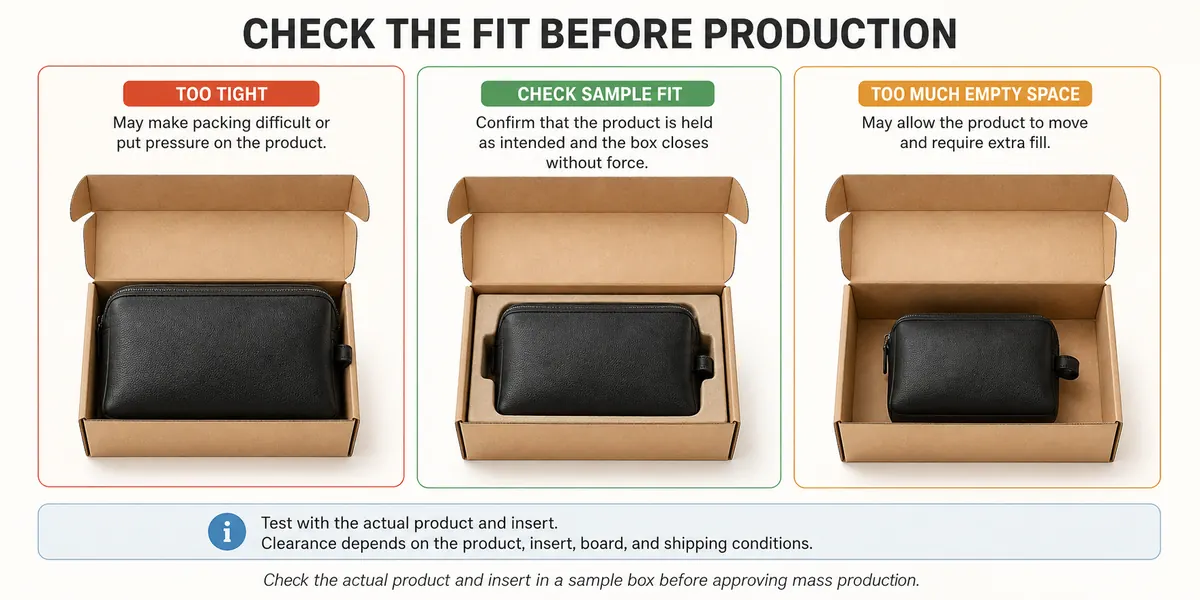
Choosing a mailer box size starts with measuring the packed product, not guessing from a product listing. A box that is too tight can make assembly difficult or put pressure on the product. One that is too large can allow the contents to move, require more protective fill, and take up extra shipping and storage space.
The goal is to choose internal dimensions that fit the product and its protective materials, then check the design with a sample before placing a production order.
1. Measure the Product in Its Shipping Orientation
Place the product in the position it will have inside the mailer box. Then measure its maximum:
- • Length (L): the longest measurement across the base
- • Width (W): the other measurement across the base
- • Height (H): the vertical measurement from the base
Include anything that will be packed with the product, such as caps, handles, accessories, or protective wrapping. For an irregularly shaped item, measure the largest space it occupies in the chosen orientation.
If the box will hold multiple products, arrange them as they will be packed and measure the complete set. Include any dividers or inserts that separate the items.
2. Account for Inserts and Protective Materials
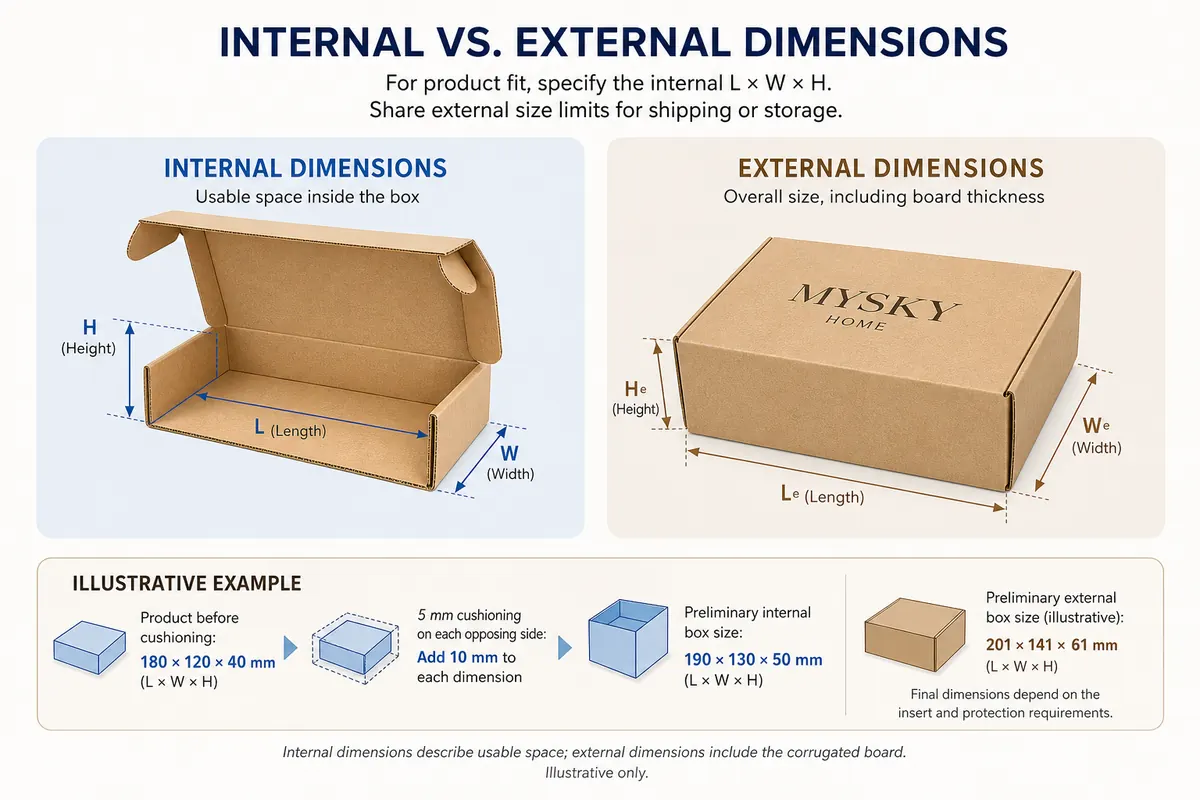
A product should not necessarily touch the inside walls of the box. If the packaging uses an insert, divider, or cushioning material, include it when determining the box’s internal dimensions. For example, if a packed product measures 180 × 120 × 40 mm, and the design uses a 5 mm layer of cushioning on each opposing side, the preliminary internal space would be approximately 190 × 130 × 50 mm.
This is an illustration, not a universal recommendation. The actual dimensions depend on the insert’s shape and thickness, how it holds the product, and the protection required during shipping. A fitted insert may use space differently from a simple layer of cushioning.
3. Specify Internal Dimensions Clearly
When the priority is product fit, provide the internal length, width, and height. External dimensions are larger because they include the thickness of the corrugated board and depend on the box structure, folds, and closure.
If the box also has to fit a shipping, storage, or retailer size limit, provide that requirement as well. Ask the manufacturer to confirm the internal and external dimensions on a drawing or sample.
Dimension conventions can vary between suppliers, so mark the measurements on a sketch or product photo rather than sending three numbers without labels.
4. Match the Box Size to the Board and Shipping Conditions
The right dimensions depend on more than the product’s size. Product weight, fragility, how the box will be handled, and whether it will be stacked can also affect the choice of board and structure. For small colored mailer boxes, Yade Printing’s reference information lists a size range of approximately 5 × 7 × 2 cm to 30 × 25 × 10 cm — roughly 2 × 2.8 × 0.8 in to 11.8 × 9.8 × 3.9 in. These are reference dimensions; confirm the final size and structure for your product.
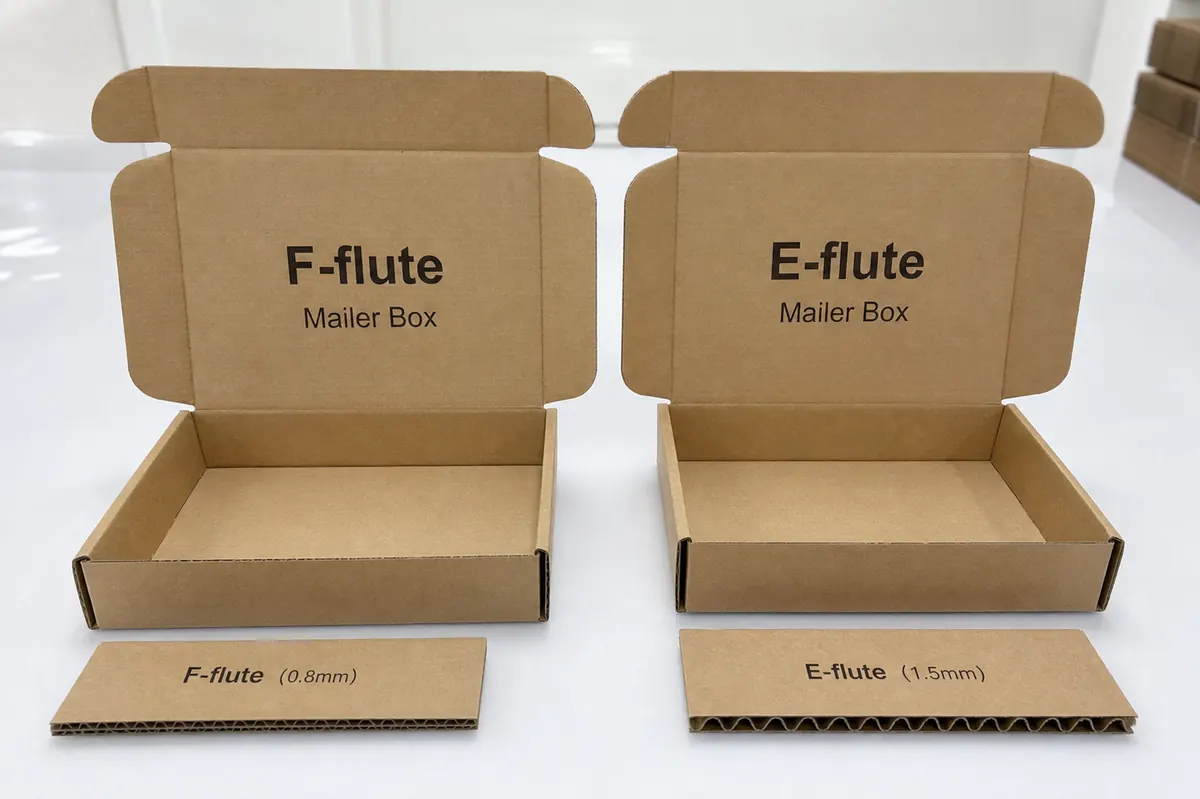
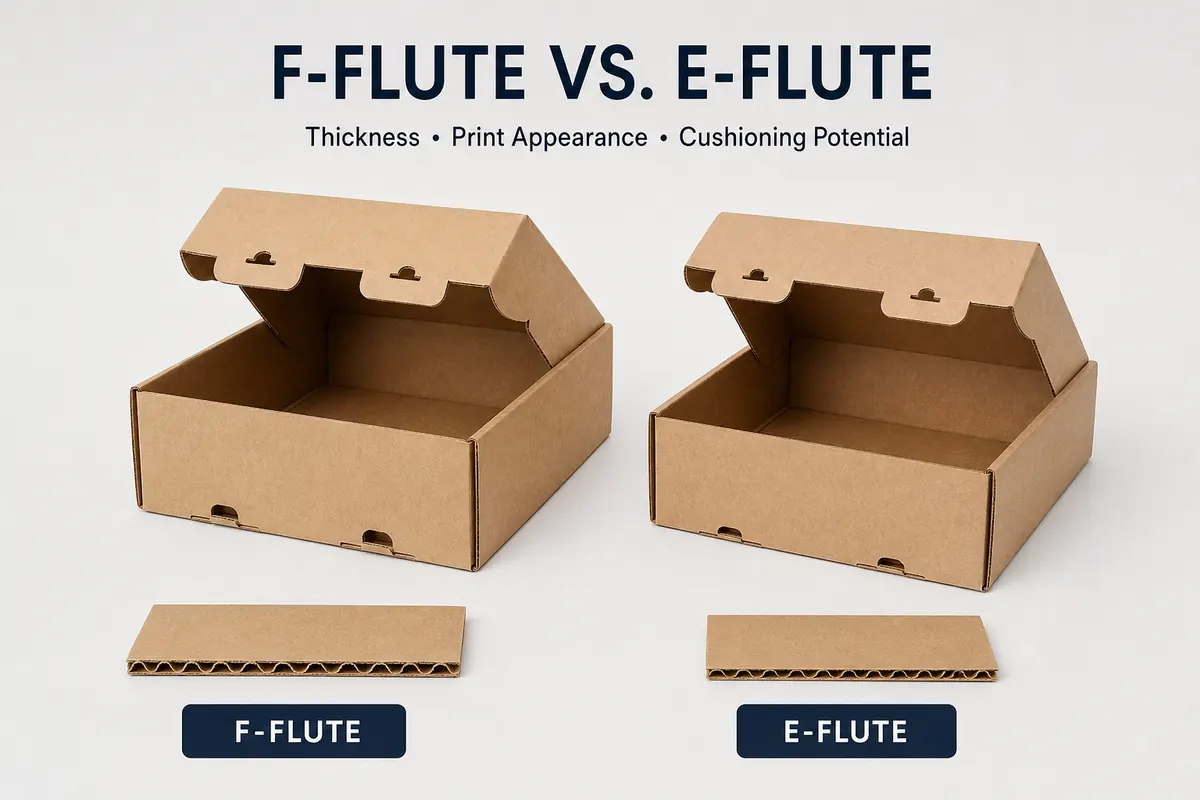
Common flute options in Yade’s product information include:
| Flute option | Approximate reference thickness | General consideration |
|---|---|---|
| F flute | About 0.8 mm | A compact profile for smaller boxes |
| E flute | About 1.5–2.0 mm | A common option for small mailer boxes |
| B flute | About 2.5–3.5 mm | A thicker option for reinforced packaging |
| EE double-wall | About 4.0 mm | A double-wall option for heavier-duty applications |
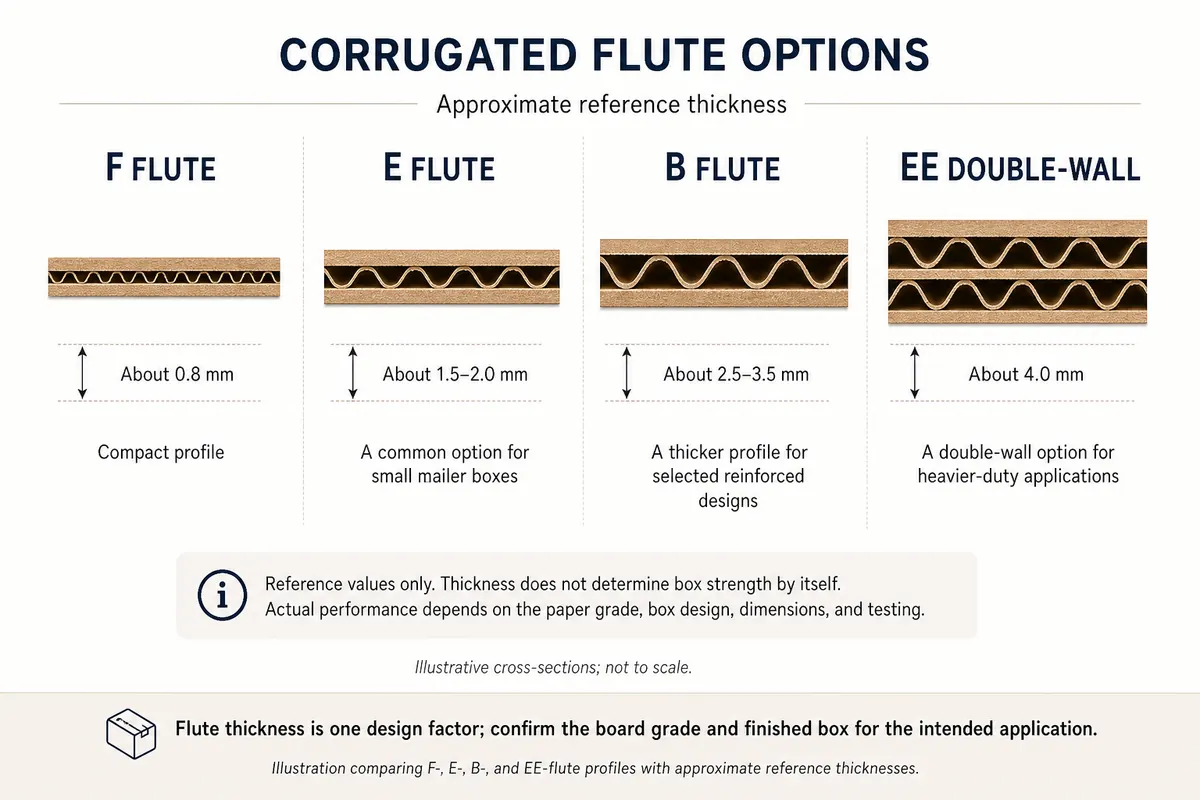
These thicknesses do not determine box strength on their own. The board grade, box dimensions, structure, product weight, and shipping conditions all matter. Ask the manufacturer to recommend a suitable design and confirm it with a sample.
5. Test the Fit Before Mass Production
A sample lets you check more than the box dimensions. Pack it with the actual product and insert, then confirm that:
- • The product goes in and comes out without difficulty.
- • The box closes securely without being forced.
- • The product is held as intended and does not move excessively.
- • The insert does not press on or mark the product.
- • The assembled box suits your packing and shipping process.
For fragile items or demanding shipping conditions, discuss whether additional fit, drop, or compression checks are appropriate for your application.
6. Prepare These Details for a Mailer Box Quote
A clear specification helps a manufacturer review the design and quote more accurately. Include as many of the following details as you can:
- • Product name and product photos
- • Maximum packed dimensions: L × W × H
- • Product weight and packing orientation
- • Accessories or multiple items packed together
- • Insert, divider, or cushioning requirements
- • Desired box quantity per design
- • Shipping destination and delivery target
- • Artwork files, brand colors, and preferred finishes
- • Any external size limits for shipping, storage, or retail
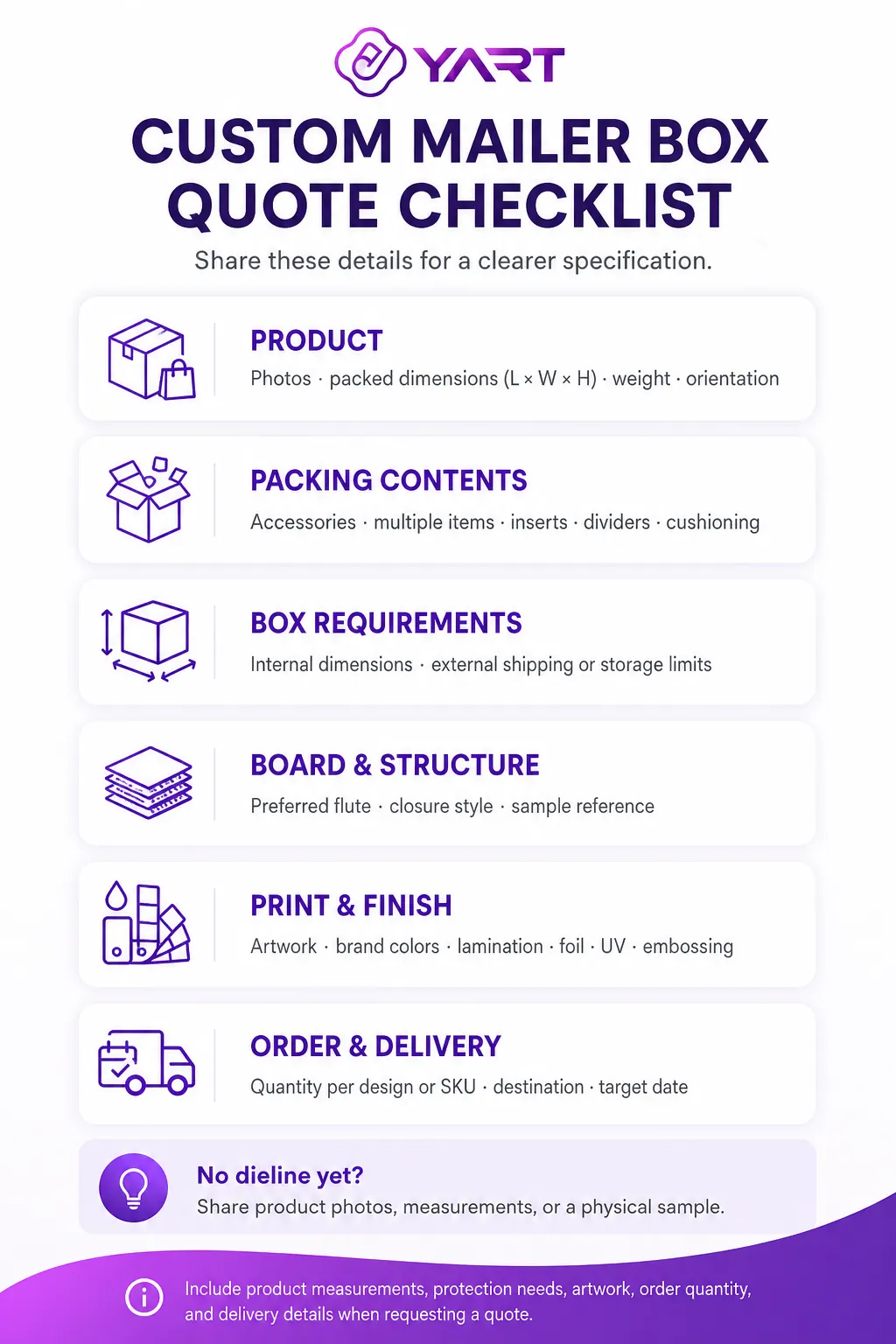
If you do not have a die line, you can still start with product measurements, photos, or a physical sample. The manufacturer can review the box structure and prepare a die line for confirmation.
How Yade Printing Can Help
Changzhou Yade Printing was established in 2008 and integrates packaging design, printing, and post-press processing. The company operates its own corrugated board line and can provide structural design and die line support for custom packaging projects.
To discuss a suitable mailer box size, send your product dimensions, photos, order quantity, and shipping requirements.
Contact Changzhou Yade Printing Co., Ltd.
Email: huyq@yadeprint.com
Phone: +86 13701508992
Experience the Print Quality Yourself
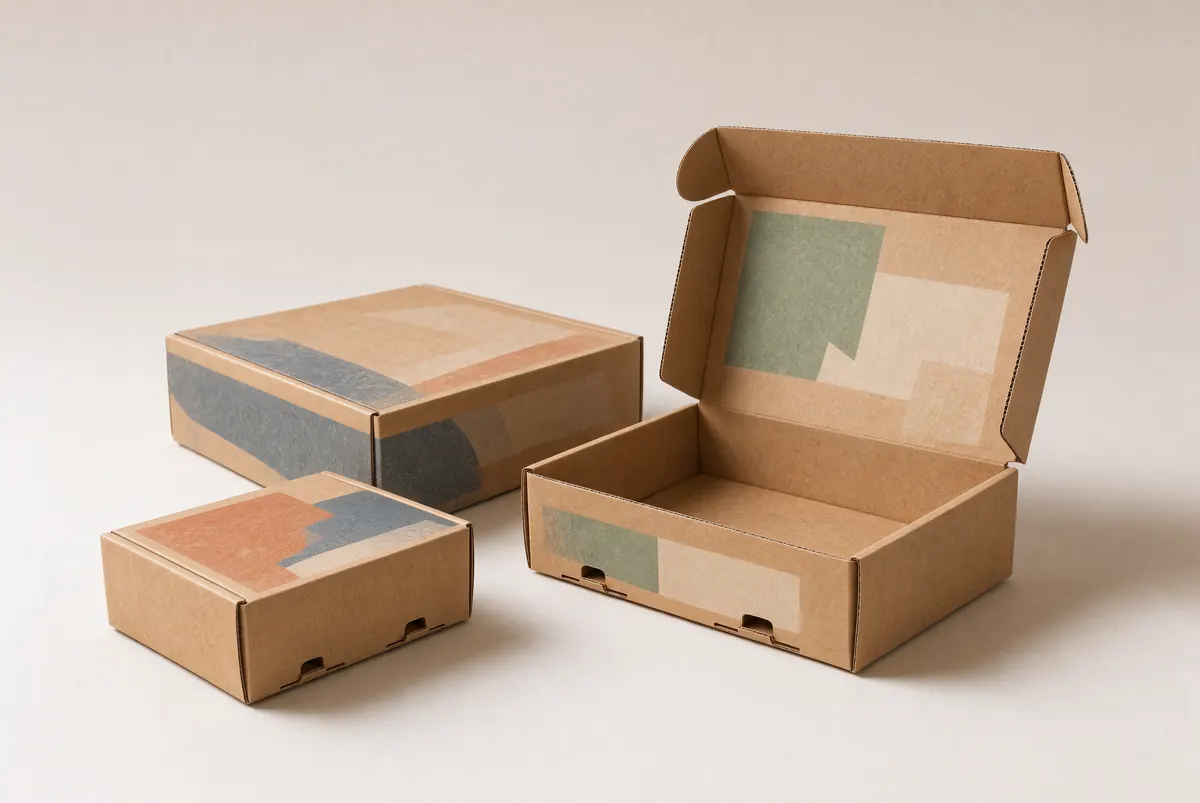
Request a free sample kit — feel the board, the finishing, and the print quality before you order.